
Student-produced news blog
The Spectrum is the online publication of the Urban Journalism Workshop, a career prep program for teens at NYU's Arthur L. Carter Journalism Institute.
Special thanks to the following for their generous support:

Arts & Entertainment
Jazz has a post-pandemic rebound
 By Kai Russell
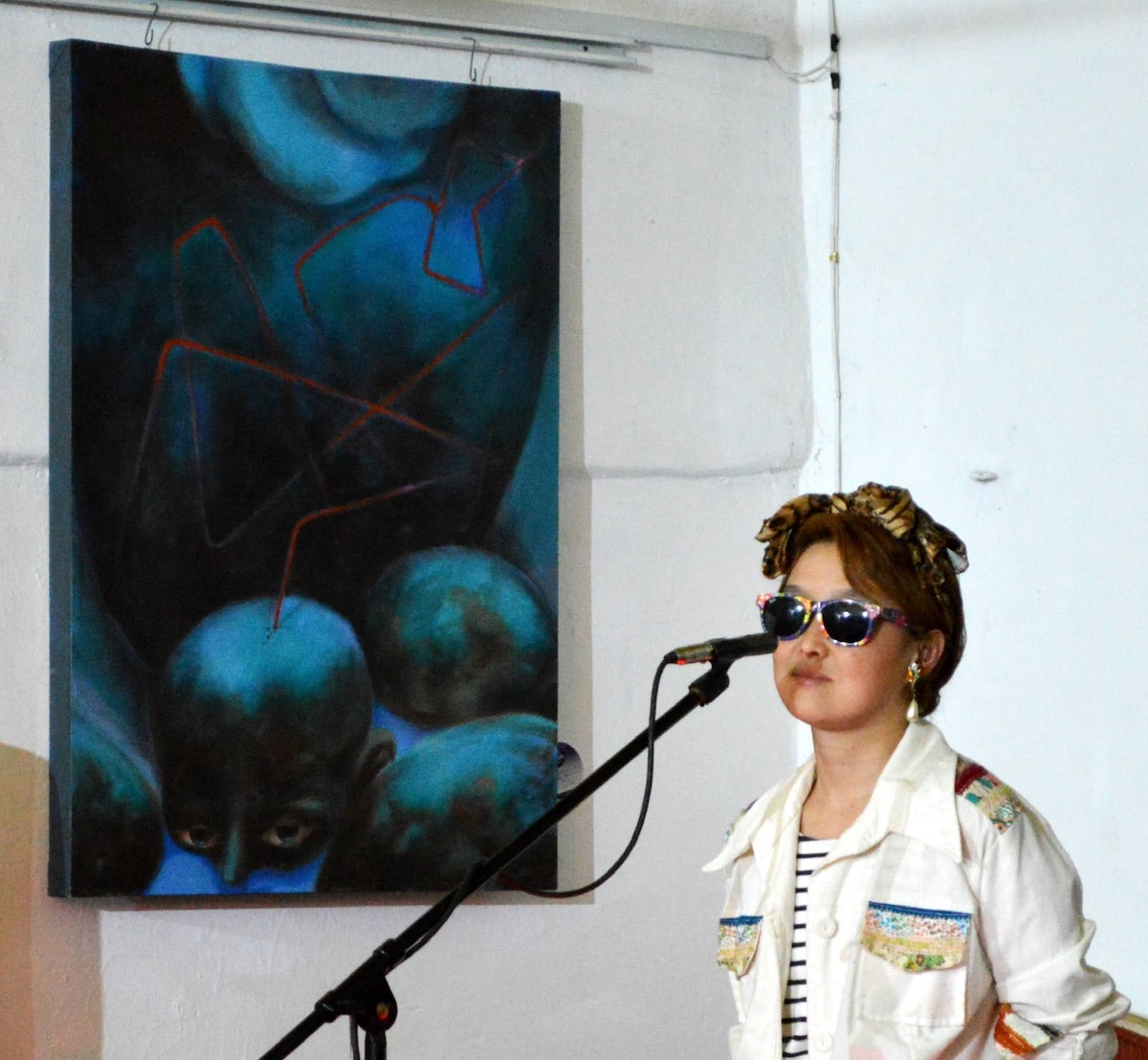
When she was 19-years-old, Rie Yamaguchi-Borden started work as a cleaning person at the Smalls Jazz Club. She had no idea she would find her passion and career there.
“It sucked me in strong enough that I started to take piano lessons, I started to sing, I started to play drums,” said Japanese immigrant Yamaguchi-Borden, now the co-owner of Ornithology, a 2-year-old jazz club in Bushwick, Brooklyn.
In spite of the recent closings of some longtime New York City jazz hotspots, Ornithology’s opening at the end of the pandemic suggests something about how jazz continues to thrive. The younger generation may be part of the reason for that. A study by Statista, published in 2023, stated that 14% of Americans between 18 and 29 listen to jazz and 18% of Americans between 30 and 49 listen to jazz.
“Last two years, it’s even getting better how open-minded people are, especially in the younger generation,” said Yamaguchi-Borden, who co-founded the Gotham Yardbird Sanctuary in 2020, amid the COVID-19 shutdown. That nonprofit organization paid jazz musicians to perform at free outdoor concerts around New York City.
The Museum of Music & Entertainment is another nonprofit that worked to keep jazz musicians employed and their music alive during the pandemic.
“Our mission specifically is to celebrate and preserve that music diversity,” said Genji Siraisi, a jazz musician and the museum’s executive director. “A huge part of that means supporting musicians at all stages of careers … and educating young people about the value of music.”
Jazz drummer Mike Camacho, 30, plays at Ornithology. “I started playing drums at 10 years old. My teacher was a jazz drummer, so he exposed me to jazz around the same time. And I’ve been pursuing it ever since then,” Camacho said.
Social media has helped to popularize jazz for young audiences, including ones who are going to jazz clubs and events.
“All it takes is one influencer or one person who has a lot of followers to post about a club,” said Camacho, adding that The Django jazz club in Manhattan lately has become popular due to social media.
“Jazz definitely, like, reaches out to younger audiences,” said Marielle Hyacinthe, a 15-year-old high school student and jazz musician. “Social media is putting it out there for younger audiences to get into.”
There is conflict between social media and jazz, however.
“Culturally, yes, I see a good future,” Camacho said. “Musically … with the advent of social media there seems to be a little less emphasis on artistry.”
Many musicians seem to agree that jazz is coming back stronger than before. Not only are audiences becoming more widespread, but venues are opening back up.
“Post-pandemic, jazz has a slowly but surely increasing audience,” Hyacinthe said.
“In a lot of places in Manhattan, Brooklyn, I see … even more gigs available,” Yamaguchi-Borden said.
Especially over the past three years, jazz has had its ups and downs. But the resiliency of jazz as an art form will ensure that it has a home, Siraisi said. “It’s always been a struggle, but I hope — my lips to God’s ears, as they say — jazz is always a part of the city. I don’t see how it couldn’t be.”