
Student-produced news blog
The Spectrum is the online publication of the Urban Journalism Workshop, a career prep program for teens at NYU's Arthur L. Carter Journalism Institute.
Special thanks to the following for their generous support:

Community News Politics
Rage and resolve over co-op’s Israel boycott
By Charlie Akira Mochizuki
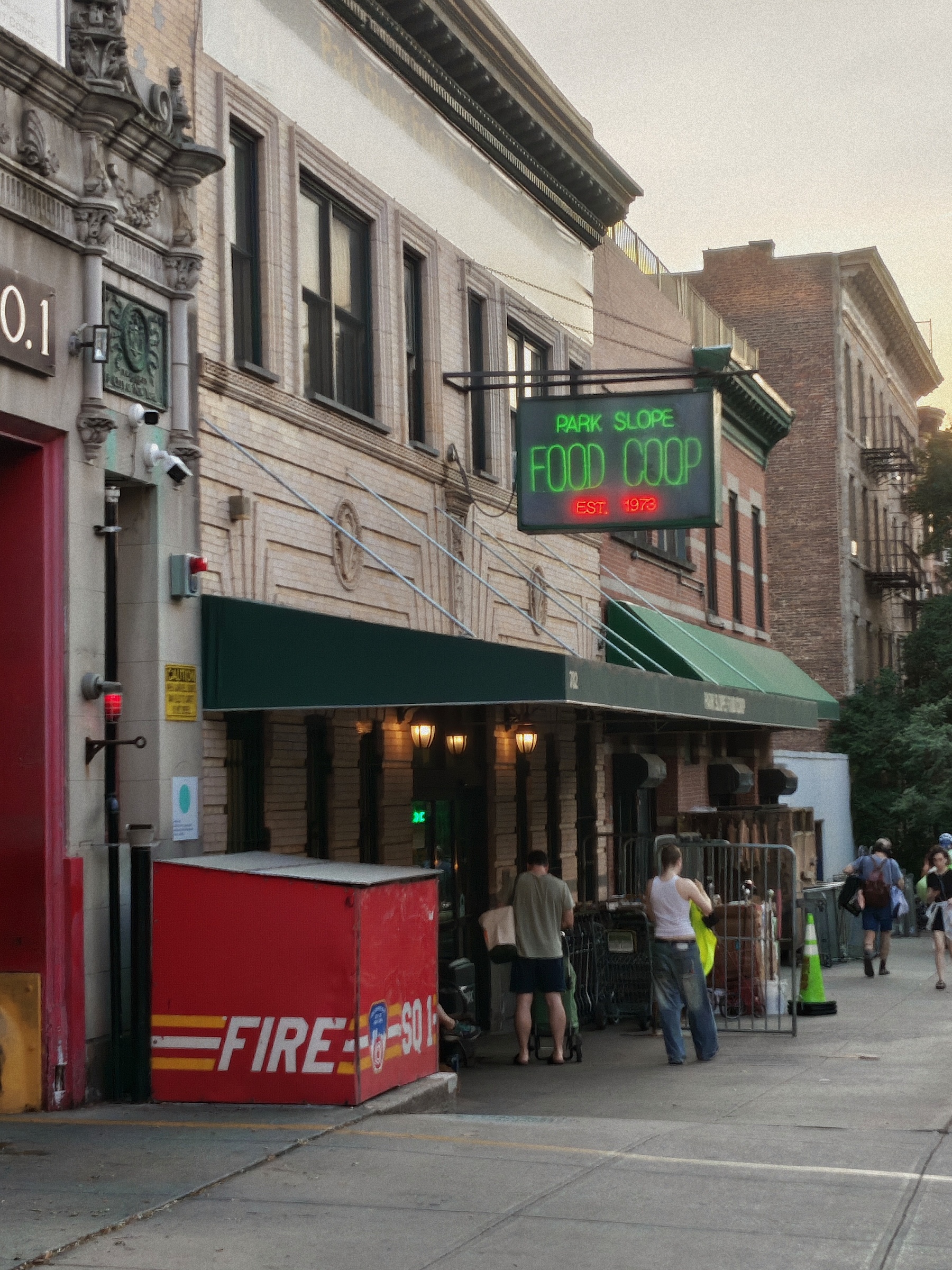
Removing peanut puffs, matzah, shampoo, conditioner and other goods made in Israel did more than change product placement on the shelves of the Park Slope Food Coop. Their absence has sparked ongoing conversations.
“Money is power,” Grace Roebuck, 27, said in early July, weeks after she was one of 4,551 co-op members who voted to stop Israeli goods from being sold at the 53-year-old co-op.
Others view the economic boycott as an abuse. “There should not be a morality test to walk into those doors,” said Greg Selig, 53, who chaired the canvassing committee for Coop 4 Unity, an anti-boycott organization.
During a May 26 co-op membership meeting that co-op leaders shifted to Zoom after Jewish members said the boycott debate triggered concerns about their safety, 67% of almost 7,000 members voted for the boycott.
“I do not feel welcome there,” said Selig, who has not shopped at the co-op since the boycott started. He called the action a “betrayal by [his] neighbors.”
Pro-boycott members have drawn parallels to the past. The co-op pulled products from South Africa to oppose apartheid and from Colorado to oppose its anti-gay legislation in the early 1990s. Those previous boycotts were all almost unanimously supported by the members, co-op co-founder Joe Holtz noted in the co-op’s newsletter, Linewaiters’ Gazette.
Selig is among those who argue that the co-op is not the right place to tackle Israel’s invasion of Gaza and what preceded it. “The understanding of what exactly is happening … it’s not there. The opportunity to bring people together, that should be the first pathway,” Selig argued, calling the three-hour May meeting “utter chaos.”
Lisa Smith, Hadassah Magazine’s estates officer and a co-op member, wrote in the online publication that glitches on Zoom prompted hundreds of people to drop off the call and not vote. The New York Post reported that Zoom’s voting feature malfunctioned.
Despite the disorder, some thought they were making a simple decision. “It’s the right thing to do,” said Sarah Ludwig, 62, a co-op member for roughly 20 years and an NYU adjunct urban planning professor.
In a letter posted on PSFC Members 4 Palestine website, seven New York rabbis wrote that the boycott wasn’t an attack against the Jewish people but that it concerned actions by Israel’s government. The rabbis called the conflation of anti-zionism and anti-semitism “a disservice to Jewish New Yorkers.”
The International Association of Genocide Scholars has characterized Israel’s aggressions in Gaza as a genocide.
Some co-op members said they believe the co-op is back to normal, especially since the private security guards that co-op leaders hired in light of the boycott have left.
“I didn’t really see a need for security,” co-op member Cecele Hartmann said.
Though an informal survey had estimated that 1,000 of the co-op’s 17,000 members would leave if the boycott were passed, it’s unclear whether that has happened. Co-op leaders have not released updates on membership size.
“It doesn’t matter what that number is,” Selig said, referring to a possible membership decline. “They were so focused on their activism and less interested in their neighbors.”
“Do I think it’s going to stop Israel from heinous acts?” Ludwig said of the boycott. “No.”
But, she added, it was important symbolically and “sends a message to the world.”