
Student-produced news blog
The Spectrum is the online publication of the Urban Journalism Workshop, a career prep program for teens at NYU's Arthur L. Carter Journalism Institute.
Special thanks to the following for their generous support:

Lifestyle & Culture Religion
Chaplain ministers to fire responders and victims
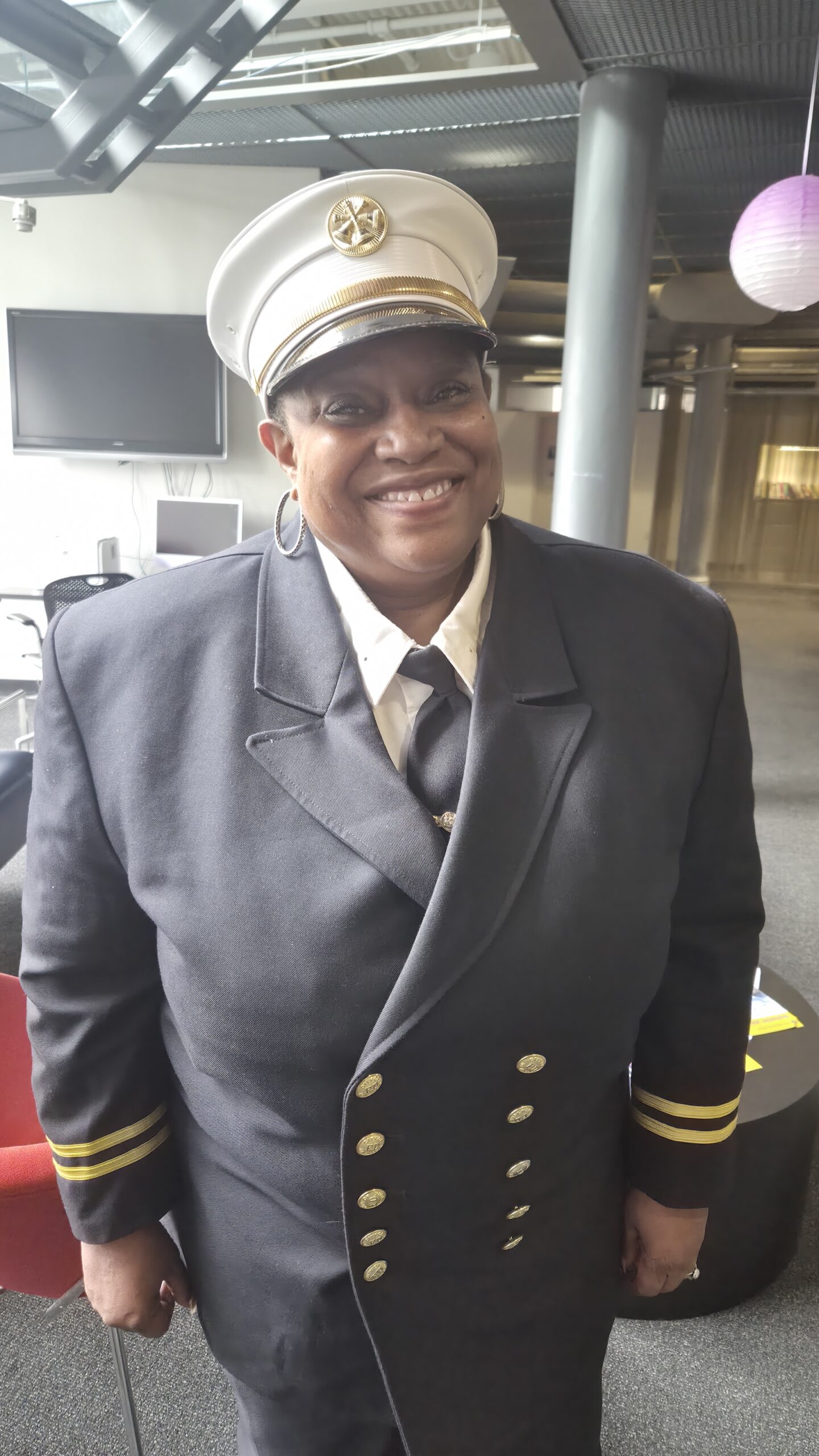
By Adrie Quinn
By Adrie Quinn
For the Rev. Pamela Holmes-Saxton, few workdays are the same. A morning may begin, as it did recently, with a plaque dedication honoring a fallen firefighter. From there, she might make hospital visits to injured first responders or stop by firehouses and emergency medical service stations to counsel those who’ve returned from handling an especially difficult emergency.
Sometimes, her job is just to listen.
“They see stuff that the human eye should never see,” Holmes-Saxton said, describing what firefighters and emergency medical technicians endure. “It’s important to just check on them and make sure they’re good.”
When Holmes-Saxton became a Fire Department of New York chaplain three years ago, she saw the position as an opportunity to give back to the firefighters, EMTs and paramedics who face tragedy, trauma and loss in the course of serving others. She is one of the seven FDNY chaplains and the first Black woman appointed to that role.
“As civilians, we pick up the phone and dial 911,” said Holmes-Saxton, also an assistant pastor at Emmanuel Baptist Church in Brooklyn. “And then we have first responders who just show up for us.”
Just hours before an interview with The Spectrum, she officiated at a ceremony dedicating a plaque honoring a firefighter who died from a 9/11-related illness at Engine 25 on the Upper West Side. From there, she planned to head to a hospital to visit a firefighter recovering from smoke inhalation and another first-responder experiencing heart palpitations. She said that those special ceremonies and hospital visits are a regular part of her work, especially as firefighters and EMS personnel continue to battle illnesses and injuries sustained on the job.
“We actually now have more people who have passed on from World Trade Center illness than the number of people that we actually lost that day,” she said.
As the first Black woman to serve as an FDNY chaplain, Holmes-Saxton hopes that her work will encourage others to follow. “[Chaplainship was] initially overwhelming, but amazing,” she said, describing how the role has evolved for her. “I really just want to do a good job so that there are other young Black women who can come behind [me].”
Holmes-Saxton said that serving the FDNY means meeting people where they are, regardless of their religion or other beliefs. She recalled a conversation with a Muslim firefighter ending with the firefighter asking if she could, whenever needed, call on Holmes-Saxton for support. Studying Islam as she was earning a master of divinity degree from Princeton Theological Seminary helped their exchange, she said.
“It doesn’t matter if you’re Baptist, if you’re Catholic, if you’re Buddhist, if you’re Muslim, if you’re Jewish,” Holmes-Saxton said. “ … At the base of it, for me, it really is about love and just loving one another in our humanity.”
It’s as important to care for spiritual health as physical and mental health, Holmes-Saxton said. Half-jokingly referring to chaplains as “God’s physicians,” she shared how a pastor and personal friend overheard two doctors debating which of their medical specialties was most important.
When the debating physicians asked the pastor what he did, the cleric replied, “‘When the two of you are unsuccessful, that’s when they call me,’” Holmes-Saxton said, laughing.
“That’s how I feel,” she added, earnestly, “about being a chaplain.”
Looking ahead, Holmes-Saxton hopes that the chaplaincy can expand its outreach to include more of the FDNY’s civilian employees.
But no matter how the role evolves, she says its purpose will remain the same: supporting the people who spend every day supporting everyone else.